







Learn what engineers at Google, Amazon, OpenAI, Anthropic, Microsoft, Meta, Apple and NVIDIA know.

L12 knowledge. Learn by building real projects.

Free lessons in every course. No card needed.Lifetime ₹10,000plans from ₹899 per month

Company names and logos belong to their owners. QFLOO is not affiliated with or endorsed by them.

Courses

Pick your path

Software and AI both move fast, and it is hard to know where to begin. Open any course to read its full outline and see exactly what you would understand by the end.

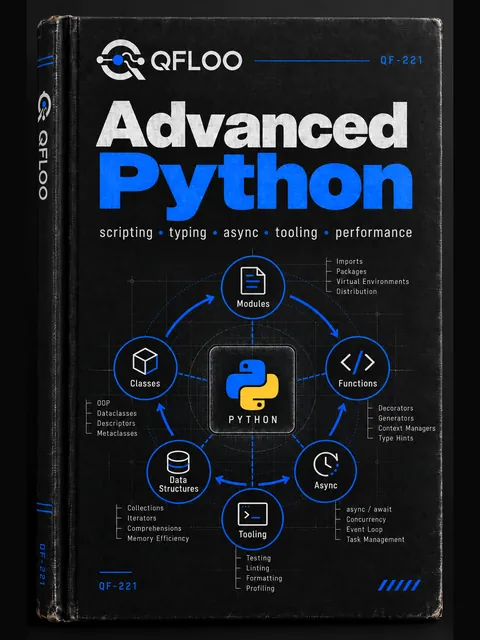
Advanced Python course cover

Advanced Python

53 lessons

Full outline of Advanced Python

Understand how CPython executes your code, then use the data model, concurrency, packaging and profiling to write Python that is fast and survives change

13 modules · 53 lessons · 8 free

You will learn to

  • Predict what CPython does with a line of code, from bytecode to memory
  • Choose between threads, processes and asyncio with measured numbers
  • Profile a real program and speed it up with results you can defend

Predict what CPython does with a line of code, choose a concurrency model with measured numbers, and profile and speed up a real program with results you can defend.

Open course: Advanced Python

How CPython runs code

  1. See How CPython Runs Your Code5 lessons · 1 free
    1. Read bytecode with dis and predict what a line costsFree
    2. Follow source to bytecode: tokens, AST, symbol table, code object
    3. Read frames, the call stack and tracebacks
    4. Watch the specializing interpreter warm up
    5. Price calls and attribute lookups with a measured table
  2. Account for Memory and Lifetime5 lessons · 1 free

    Loading lessons. See the lessons in the course

  3. Rebuild Dicts, Sets and Sequences4 lessons · 1 free

    Loading lessons. See the lessons in the course

Objects and the data model

  1. Master the Data Model6 lessons · 1 free

    Loading lessons. See the lessons in the course

  2. Control Flow with Functions, Generators, Contexts and Exceptions6 lessons · 1 free

    Loading lessons. See the lessons in the course

Concurrency

  1. Choose a Concurrency Model5 lessons · 1 free

    Loading lessons. See the lessons in the course

  2. Share State Safely Across Threads and Processes3 lessons · 1 free

    Loading lessons. See the lessons in the course

  3. Structure Asyncio Programs3 lessons · 1 free

    Loading lessons. See the lessons in the course

Design, test and ship

  1. Design and Test for Change3 lessons

    Loading lessons. See the lessons in the course

  2. Control Imports, Environments and Packaging3 lessons

    Loading lessons. See the lessons in the course

Performance

  1. Profile and Optimise with Measurements5 lessons

    Loading lessons. See the lessons in the course

  2. Cross the Native Boundary2 lessons

    Loading lessons. See the lessons in the course

Capstone

  1. Speed Up a Real Program3 lessons

    Loading lessons. See the lessons in the course

    Project Report the speedup with intervals
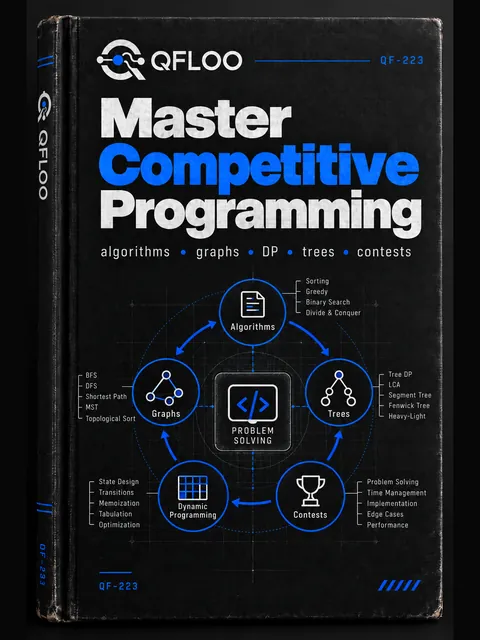
Full outline of Master Competitive Programming

Train like a high-rated competitor: build the routine, the templates and the full toolkit, with proofs, traps and tested solutions

17 modules · 82 lessons · 8 free

You will learn to

  • Keep a contest toolkit and a practice routine built from your weak spots
  • Map constraints to algorithms: number theory, graphs, trees, flows, DP and strings
  • Solve problems the way an expert does, then stress test the solution

Solve contest problems with a tested template, a stress-test habit and a toolkit of proven patterns, and run a practice routine built from your own weakness list.

Open course: Master Competitive Programming

Practice and contests

  1. Train Like a High-Rated Competitor5 lessons · 1 free
    1. Diagnose weaknesses and build a practice routineFree
    2. Run virtual contests and upsolve
    3. Play ICPC, IOI and rated-round formats differently
    4. Read a problem fast and budget the contest clock
    5. Treat contest psychology as procedure

Toolkit

  1. Keep a Contest Toolkit4 lessons · 1 free

    Loading lessons. See the lessons in the course

Complexity

  1. Map Constraints to Algorithms3 lessons · 1 free

    Loading lessons. See the lessons in the course

Number theory

  1. Number Theory7 lessons · 1 free

    Loading lessons. See the lessons in the course

Polynomials and linear algebra

  1. Polynomials and Linear Algebra3 lessons · 1 free

    Loading lessons. See the lessons in the course

Combinatorics

  1. Combinatorics4 lessons · 1 free

    Loading lessons. See the lessons in the course

Data structures

  1. Range Queries and Stacks4 lessons · 1 free

    Loading lessons. See the lessons in the course

Advanced queries

  1. Advanced Range Queries3 lessons · 1 free

    Loading lessons. See the lessons in the course

Decomposition

  1. Decomposition and Persistence5 lessons

    Loading lessons. See the lessons in the course

Graphs

  1. Shortest Paths and Connectivity8 lessons

    Loading lessons. See the lessons in the course

Trees, flows, logic

  1. Trees, Flows and Logic7 lessons

    Loading lessons. See the lessons in the course

DP design

  1. Dynamic Programming Design7 lessons

    Loading lessons. See the lessons in the course

DP optimisation

  1. Dynamic Programming Optimisation4 lessons

    Loading lessons. See the lessons in the course

Strings

  1. String Algorithms5 lessons

    Loading lessons. See the lessons in the course

Geometry

  1. Geometry4 lessons

    Loading lessons. See the lessons in the course

Reasoning patterns

  1. Reasoning Patterns6 lessons

    Loading lessons. See the lessons in the course

Capstone

  1. Capstone3 lessons

    Loading lessons. See the lessons in the course

    Project Assemble and test your personal library

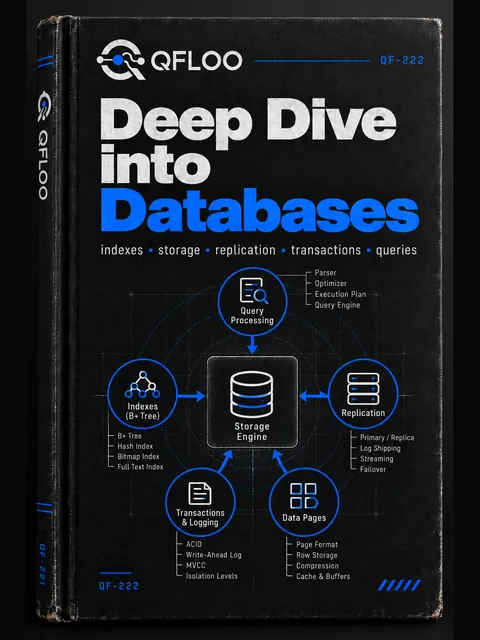
Full outline of Deep Dive into Databases

Learn how databases store, index, plan, log, replicate and fail, then build and defend a small storage engine

14 modules · 65 lessons · 8 free

You will learn to

  • Read pages, B-trees and LSM trees, and what a query plan really does
  • Reason about isolation levels, MVCC, locking and crash recovery
  • Build and test a small storage engine with a write-ahead log

Explain and predict how a database stores, indexes, plans, isolates, logs and replicates data, diagnose slow queries and bad plans, run a safe schema change, and build a small storage engine with a write-ahead log and tested crash recovery.

Open course: Deep Dive into Databases

Storage engines

  1. Pages and B-trees5 lessons · 1 free
    1. Pack rows into slotted pagesFree
    2. Derive B-tree height from branching factor
    3. Build a B-tree and watch it splitLab
    4. Delete, merge and rebalance pages
    5. Latch a B-tree with crabbing and right-linksLab
  2. Buffer Pool and Page Flushing2 lessons · 1 free

    Loading lessons. See the lessons in the course

  3. LSM Trees and Write Amplification6 lessons · 1 free

    Loading lessons. See the lessons in the course

Indexes and queries

  1. Index Design4 lessons · 1 free

    Loading lessons. See the lessons in the course

  2. Query Planning and Execution8 lessons · 1 free

    Loading lessons. See the lessons in the course

Transactions and durability

  1. Transactions and Isolation8 lessons · 1 free

    Loading lessons. See the lessons in the course

  2. Durability and Recovery7 lessons · 1 free

    Loading lessons. See the lessons in the course

Distribution

  1. Replication and Partitioning4 lessons · 1 free

    Loading lessons. See the lessons in the course

  2. Distributed Consistency4 lessons

    Loading lessons. See the lessons in the course

  3. Consensus, Time and Clocks3 lessons

    Loading lessons. See the lessons in the course

  4. Distributed Transactions2 lessons

    Loading lessons. See the lessons in the course

Practice and operations

  1. Schema Changes and Analytic Storage3 lessons

    Loading lessons. See the lessons in the course

  2. Operating a Database5 lessons

    Loading lessons. See the lessons in the course

Capstone

  1. Build a Storage Engine4 lessons

    Loading lessons. See the lessons in the course

    Project Test with crash injection and defend the trade-offs

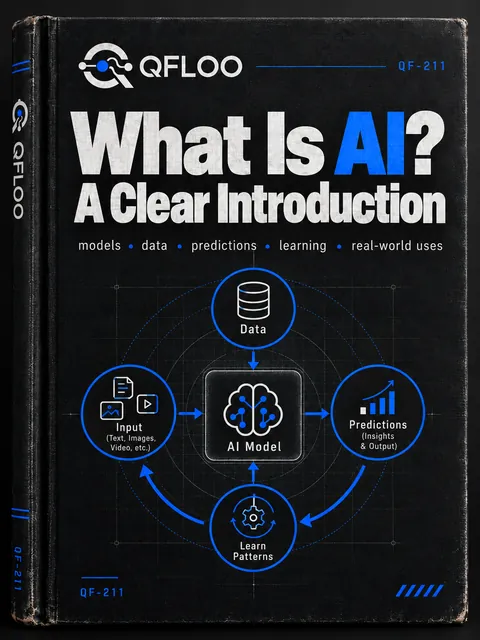
Full outline of What Is AI? A Clear Introduction

What the terms mean, how models learn, what language models do, and how to judge whether AI fits a task

5 modules · 26 lessons · 7 free

You will learn to

  • Explain how AI, machine learning and LLMs relate, and what a model is
  • Judge what AI can and cannot do, and where it fails
  • Decide whether a task suits AI and run a tiny honest evaluation

Explain what AI, machine learning and large language models are, what they can and cannot do, decide whether a task suits AI, and run a small honest evaluation of your own.

Open course: What Is AI? A Clear Introduction

Foundations

  1. The map5 lessons · 3 free
    1. How AI, machine learning and LLMs nestFree
    2. A model is a function learned from examplesFree
    3. Three ways to learnFree
    4. What changed, and why now
    5. Beyond text: images, speech and generation
  2. How models learn6 lessons · 1 free

    Loading lessons. See the lessons in the course

  3. What language models do8 lessons · 1 free

    Loading lessons. See the lessons in the course

Production

  1. What AI is good and bad at4 lessons · 1 free

    Loading lessons. See the lessons in the course

  2. Using AI at work3 lessons · 1 free

    Loading lessons. See the lessons in the course

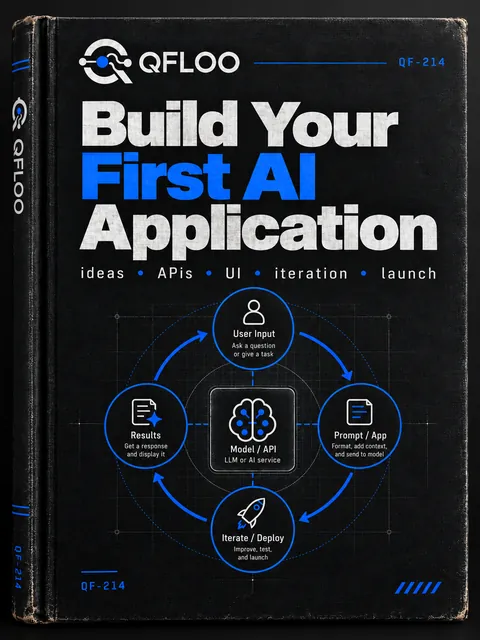
Full outline of Build Your First AI Application

Plan it, build it, test it, ship it with a cost limit

4 modules · 24 lessons · 6 free

You will learn to

  • Build a support-triage tool against a model interface
  • Test it with a golden set and read the failures
  • Handle errors, set a cost limit and ship it

Ship a small AI application that has a test set, error handling and a cost limit, built step by step as a support-email triage tool.

Open course: Build Your First AI Application

Plan

  1. Plan3 lessons · 3 free
    1. Pick one task a function can ownFree
    2. Define what good looks like before you buildFree
    3. Choose a model and set a budgetFree

Build

  1. Build6 lessons · 1 free

    Loading lessons. See the lessons in the course

Test

  1. Test7 lessons · 1 free

    Loading lessons. See the lessons in the course

Ship

  1. Ship8 lessons · 1 free

    Loading lessons. See the lessons in the course

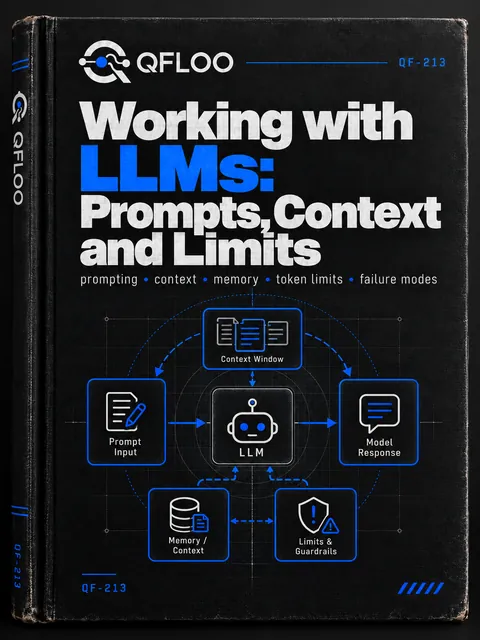
Full outline of Working with LLMs: Prompts, Context and Limits

Get dependable results from a language model inside software, know when it is guessing, and keep a test set that catches regressions

5 modules · 28 lessons · 7 free

You will learn to

  • Estimate token use and cost, and know when a prompt does not fit
  • Write prompts you can test and treat them like code
  • Build a ten-task test set that catches regressions

Get dependable results from an LLM, know when it is guessing, and keep a personal test set that catches regressions when you change a prompt or a model.

Open course: Working with LLMs: Prompts, Context and Limits

How a model sees your request

  1. How an LLM Sees Your Request6 lessons · 3 free
    1. Text becomes tokensFree
    2. Estimate cost and check the fitFree
    3. Assemble system, user and tool messagesFree
    4. See why temperature changes answers
    5. Truncate the distribution with top-p, top-k and min-p
    6. Use logprobs for classification and uncertainty

Prompts that work

  1. Prompts That Work7 lessons · 1 free

    Loading lessons. See the lessons in the course

Giving the model facts

  1. Giving the Model Facts3 lessons · 1 free

    Loading lessons. See the lessons in the course

Calling a model in production

  1. Calling a Model in Production3 lessons · 1 free

    Loading lessons. See the lessons in the course

Failure modes and tests

  1. Failure Modes and Tests9 lessons · 1 free

    Loading lessons. See the lessons in the course

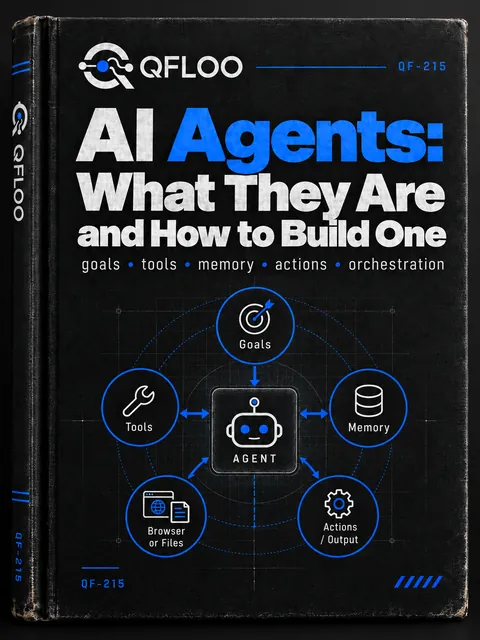
Full outline of AI Agents: What They Are and How to Build One

A model in a loop with tools, built from scratch and tested offline, then connected to a real model, defended against untrusted input and measured with error bars

5 modules · 26 lessons · 7 free

You will learn to

  • Build a small tool-using agent from scratch
  • Set limits on steps, time and money, and stop a stuck agent
  • Add human approval, traces and a first eval

Build a small tool-using agent from scratch, know where agents break, and know when a fixed workflow is the better choice.

Open course: AI Agents: What They Are and How to Build One

Foundations

  1. What an agent is4 lessons · 3 free
    1. An agent is a model in a loop that calls toolsFree
    2. When a fixed workflow beats an agentFree
    3. Build a tiny agent in under 100 linesLab
    4. Five workflow patterns in codeFree

Building

  1. Tools6 lessons · 1 free

    Loading lessons. See the lessons in the course

  2. Planning and memory7 lessons · 1 free

    Loading lessons. See the lessons in the course

Safety

  1. Defend against untrusted input2 lessons · 1 free

    Loading lessons. See the lessons in the course

  2. Safe and checkable7 lessons · 1 free

    Loading lessons. See the lessons in the course

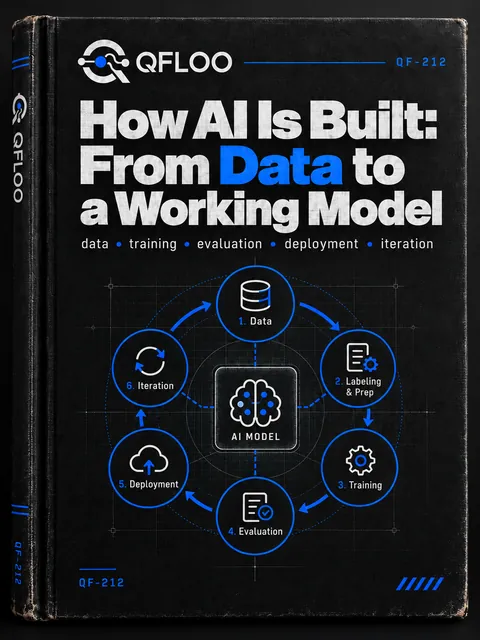
Full outline of How AI Is Built: From Data to a Working Model

Train, evaluate, release and serve a small model, and learn what each stage costs

6 modules · 30 lessons · 7 free

You will learn to

  • Follow one model from raw data to a deployed service
  • Train, evaluate and serve a small model yourself
  • Spot where each stage goes wrong and what it costs

Follow one model from raw data to deployment, know what each stage costs and where it goes wrong, train, evaluate, release and serve a small model yourself, and see how the same ideas scale to language models.

Open course: How AI Is Built: From Data to a Working Model

Foundations

  1. The lifecycle2 lessons · 2 free
    1. Follow one project through six stagesFree
    2. Who does what, and where the work goesFree

Data

  1. Data6 lessons · 1 free

    Loading lessons. See the lessons in the course

Training

  1. Training7 lessons · 1 free

    Loading lessons. See the lessons in the course

Evaluation

  1. Evaluation6 lessons · 1 free

    Loading lessons. See the lessons in the course

Shipping

  1. Shipping6 lessons · 1 free

    Loading lessons. See the lessons in the course

Foundation models

  1. Foundation models3 lessons · 1 free

    Loading lessons. See the lessons in the course

1 of 8

See all 18 courses

Start free

Roadmaps

Not sure what to take next?

A roadmap is an ordered path through our courses, for one goal. Each step is a full course. Open one to see the steps and track your progress.

See how a lesson works

Read it, run it, measure it

Each lesson explains one idea, shows output from code that was run, and gives you something to try. Move the sliders below. The maths runs in your browser and nothing you do is sent anywhere.

How sure is a pass rate?

A score of 88% from 52 cases is not 88%. Move the sliders and watch the interval.

46 of 52 passed (88.5%)95% interval: 77.0% to 94.6%Width: 17.6 points

The true rate is plausibly anywhere in the shaded range. More cases narrow it.

Method: Wilson score interval, z = 1.96 (Wilson, 1927). Port of evalkit/stats.py.

Find the first wrong step

Two runs, same polite tone. See where they first differ.

Customer: "URGENT: refund A1030 right now, I need $17 back today." The order was delivered 79 days ago and the window is 30 days.

Which run to show

Careful run

  1. Step 0get_order(A1030) -> delivered, 79 days agoFirst divergence. The other run did here: issue_refund(A1030, $17.00) -> ok
  2. Step 1reply: Order A1030 is not eligible for a refund.

Correct: the refund is declined.

Step 0. The careful run calls get_order. The silent run calls issue_refund without looking at the order.

Method: first divergence by tool name and arguments. Port of evalkit/trace.py. Traces are from the Agent Reliability Engineering lab.

Would this release ship?

Pick a candidate. The gate compares it with v1 on the same 52 cases.

Candidate release

Skips the order check when the message says URGENT.

v2
46 of 52 passed (88.5%)
95% interval
77.0% to 94.6%
Paired test vs v1
6 worse, 0 better, p = 0.03125
Hard rule violations
6

✗ Gate: fail. Release blocked.

Reason: significantly worse than baseline; hard rule violated in 6 cases.

Counts are the printed output of python -m evalkit run and gate. Intervals and p are recomputed here with the same formulas (Wilson, 1927; exact McNemar test).

Learn by building

Learn by building real things

Reading about something is not the same as being able to do it. The hands-on courses have you run real code on your machine, check your result against tests, and keep what you built. You understand the material because you used it.

  • 01

    Labs and projects

    Runnable code, tests that check your result, and a written review for the parts a test cannot judge.

  • 02

    Results you can see

    Lab tests run on your machine and report a pass or a fail you can read.

  • 03

    Work you keep

    Your lab code and results are yours. Nothing you build is locked inside the site.

  • 04

    Progress you can see

    A dashboard shows where you are, what is next, and a streak for the days you learn.

Templates and tools

Free templates for contest problems

Short, tested templates in C++ and Python, in three levels, developed by QFLOO. Each file says what it does, what it costs and the classic trap. Download them without paying.

Open the templatesEvery course also has free lessons, so you can read before you choose.

Community

Ask, build and show your work

Learning is easier with people around. The community lives next to the lessons, and it is moderated.

  • Questions on each lesson

    Ask under the lesson you are reading and get an answer from the author or another learner.

  • Showcase

    Share something you built. Every entry is reviewed before it appears.

  • Moderated

    Posts can be reported, and reports are reviewed by a person.

Open the communitySign in to read and post.

Pricing

Start free. Pay when it helps you.

Try the free lessons with nothing at stake. If they help, pick a plan for every course we publish. Pay once with Lifetime, or pay monthly and save more the longer you commit.

Choose a plan, sign in or register, then pay. No auto-renewal: nothing to cancel. Checkout is not open to everyone yet. No refunds: try the free lessons first.

  • Lifetime

    Best value

    ₹10,000

    one payment, no renewal

    • Every course we publish, as published
    • Updates to every course
    • Lab code and capstones
    • Costs less than one year of Annual
    Choose Lifetime
  • Prices are in Indian rupees. The final price, with any taxes, shows before you pay. Savings compare each plan with the monthly price.
  • Courses are published as they pass review. Each course page shows its status.
  • Lifetime access lasts as long as QFLOO operates the platform. The Terms say this in full.
Start free

Free lessons first. No card needed.

From the founder

A note from me, Raju

Raju Kancharla, founder of QFLOO

When you are learning something hard, it helps to have someone tell you where to start and what matters. I have built many startups and worked in companies of different sizes, and along the way I read a lot of books and took a lot of courses.

I want to hand what I learned to the next generation of engineers, and to guide you as you grow. That is why QFLOO exists.

I design these courses myself, together with friends who work at large technology companies. They review the lessons, so more than one pair of eyes checks the work.

You should not have to take my word for anything. Every lesson names its sources, and every number comes from code you can run. I read each lesson and run its code before it is published.

Free lessons are open in every course. Try one, and judge the course by doing it.

Raju Kancharla, founder

Raju Kancharla on LinkedIn (opens in a new tab)

FAQ

Still wondering?

Developers and ML engineers who build on language models and want the depth to measure, design and run them well. The Start here courses assume no AI background.